DoorDash Found Them. Now What.
One operator paid $80,000 in DoorDash commissions last year. The platform found him thousands of customers. Here is what happened to most of them after that first order.
Michael Westhafer
4/25/20267 min read
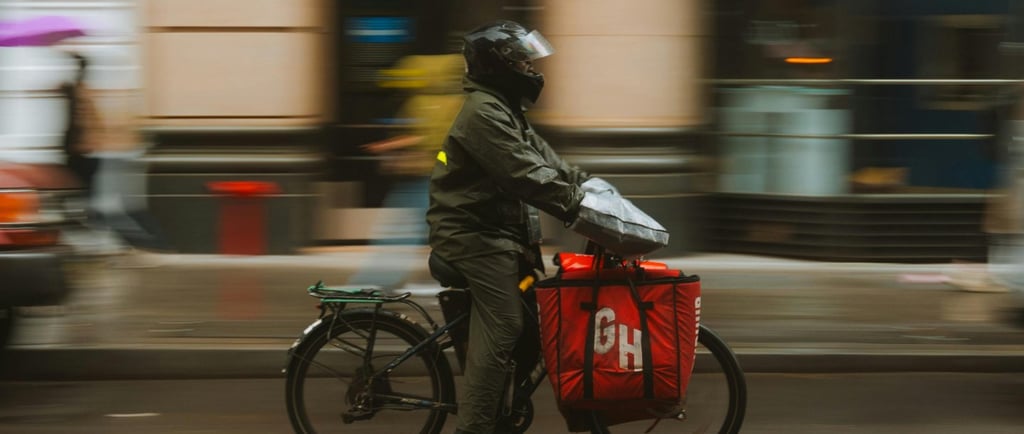
The Most Expensive Way to Find a New Customer Is to Keep Finding the Same One Through Third-Party Delivery.
A restaurant operator I work with told me something recently that stopped me mid-conversation.
He paid DoorDash $80,000 in commissions last year.
Not revenue. Commissions. Money that left his restaurant and went to a platform in exchange for the delivery orders it sent his way.
He was not angry about it. He was matter of fact. He needs the volume. DoorDash delivers it. That is the deal.
But then he asked the question that is worth every independent restaurant operator sitting with.
Is there a way to keep the volume without paying that much for it?
The answer is yes. Not completely. Not overnight. But meaningfully, consistently, and with a combination of low-tech tactics and a website that most operators already have and are significantly underusing.
What Third-Party Delivery Actually Is
Before the argument, the honest version of what DoorDash, Uber Eats, and Grubhub actually provide.
They are discovery engines. A guest who has never heard of your restaurant can find it on a third-party platform the same way they find it on Google. That visibility has real value, especially for operators in competitive markets or newer concepts still building a customer base.
They handle logistics. The delivery infrastructure, the driver network, the tracking technology, building that independently is not realistic for most independent operators. Third-party delivery platforms solve a genuine operational problem.
And they send orders. Real orders, real revenue, real guests who chose your restaurant over the hundreds of other options on the same platform.
None of that is nothing. Operators who dismiss third-party delivery entirely are often leaving volume on the table they cannot afford to lose.
But here is what the relationship actually costs when you look at it honestly.
DoorDash, Uber Eats, and Grubhub typically charge between 15 and 30% commission on every order processed through their platforms. On a $35 ticket, that is between $5.25 and $10.50 going to the platform before the operator sees a dollar of it. Multiply that across hundreds of orders a week and the number starts to look like the one my client shared with me.
$80,000 in a single year.
That is not a delivery cost. That is a dependency cost. And the question every operator should be asking is not whether third-party delivery is worth using. It is whether the current ratio of platform orders to direct orders is the ratio that makes the most sense for their business.
Reframe It as a Marketing Expense
Here is a shift in thinking that changes the entire relationship with third-party delivery.
Stop treating it as a fulfillment channel. Start treating it as a paid customer acquisition tool.
Every commission paid to DoorDash, Uber Eats, or Grubhub is buying access to a guest who may never have found the restaurant otherwise. That is not fundamentally different from paying for a Google ad or a social media promotion. The platform is delivering a new customer to the door, digitally speaking, and charging for the introduction.
The problem is not the introduction. The problem is that most operators let the relationship end there. The guest orders through the platform. The commission gets paid. And the next time that guest wants to order, they go back to the app because nothing happened in between to give them a reason to do anything different.
The operators who are managing this most effectively are treating that first platform order as step one of a two-step process.
Step one is acquisition. The platform delivers the guest. The commission gets paid. That is the cost of finding a new customer.
Step two is conversion. The restaurant captures that guest directly and gives them a compelling reason to order outside the platform next time.
Step two is where most operators are leaving significant money on the table.
The Bag Stuffer
The lowest-tech, highest-leverage tool for shifting that ratio costs almost nothing to implement.
Every order that goes out through DoorDash, Uber Eats, or Grubhub is an opportunity to put something in the bag that starts a direct relationship with that guest.
A simple insert. A card. Something that gives the guest a specific, compelling reason to connect with the restaurant directly before they order again.
The offer does not have to be complicated. A QR code that links to a sign-up page. A reason to scan it. Something worth the thirty seconds it takes to do it.
Some operators that are executing this well are using offers like:
Sign up and get a free appetizer, beverage, or dessert on your next order placed directly through us.
Sign up for our VIP list and get $5 off your next direct order.
Join our text list and be the first to know about specials, new menu items, and offers you will not find anywhere else.
The specific offer matters less than the structure of it. It has to feel worth it to the guest in the moment they are holding the bag. And it has to connect them to something the restaurant owns: an email list, an SMS list, a direct relationship rather than sending them back to the platform.
That QR code does not need to go to a complicated landing page. It needs to go to a simple, clean sign-up experience that works on a phone, takes under thirty seconds to complete, and delivers on whatever was promised in the bag.
That is it. That is the mechanism.
A guest who signed up through a bag stuffer after their first DoorDash order is now a guest the restaurant can reach directly. No platform involved. No commission on the next conversation.
The Price Differential
There is another lever most operators are not using clearly enough.
Most independent restaurants that operate on third-party delivery platforms raise their menu prices on those platforms to offset the commission cost. That is a common and completely reasonable practice. If a 25% commission is eating into margins on a $35 ticket, raising that ticket to $42 on the platform brings the net closer to what a direct order would produce.
But here is where the opportunity lives.
If prices are higher on DoorDash, Uber Eats, and Grubhub than they are on a direct order, that difference is a built-in incentive for a guest to order directly. A guest who discovers they can get the same meal for less by ordering directly has a clear financial reason to change their behavior.
Most operators know they have this price differential. Most guests do not know it exists.
That is the gap worth closing.
The bag stuffer is one way to close it. A simple line on the insert that says something like "prices on our direct site are our regular menu prices" does two things at once. It explains the value of signing up and it gives the guest a specific reason to change how they order next time.
This is not a complicated strategy. It is a clear communication of something that is already true. The restaurant already has lower prices on the direct channel. The guest just needs to know that.
What the Website Has to Do
Independent restaurants operate under real constraints that chains do not. This argument is not about rebuilding your website into a full ordering platform or replicating what the big chains have spent millions developing.
The website's job in this equation is simple. When a guest scans that QR code from the bag insert, they land somewhere that makes giving you their contact information as easy as possible.
A clean, fast-loading page on a phone. A simple form. A name and an email address or a phone number for SMS. A confirmation that the offer is on its way. Done.
It does not need to be elaborate. It needs to be frictionless. The guest who scanned the code is already interested. They just had a meal they enjoyed. The intent is there. The only thing that kills it at that moment is a sign-up experience that asks too much or takes too long.
From that point forward the relationship lives on the restaurant's terms. A direct line to a guest who came through a third-party platform and chose to connect differently next time.
That is the shift. Not from platform orders to no platform orders. From platform orders with no follow-up to platform orders that start a relationship the restaurant actually owns.
The Math Worth Doing
The operator who paid $80,000 in commissions last year was processing significant volume through third-party delivery. He is not unusual. Plenty of independent operators are in the same position and most of them have never done the specific math on what shifting even a portion of that volume to direct ordering would mean.
Here is a simple version of that math.
If an operator is doing 40 orders a night through third-party delivery at an average ticket of $35, that is $1,400 in daily order volume. At a 25% commission rate, $350 of that is going to the platform every day. Over a year, that is roughly $127,750 in commissions.
A guest who orders that same $35 ticket directly by phone, through a third-party ordering system the restaurant controls, or through any direct channel, costs the operator a fraction of that commission. The exact savings depend on the direct ordering setup, but the gap between 25% and 2 to 3% is significant at any volume.
Shifting 30% of those orders to direct channels does not require eliminating anything. It requires capturing guests while they are already in the bag and giving them a financial and experiential reason to do something different next time.
On 40 orders a night, shifting 30% to direct means 12 orders a night leaving the platform. At a $35 ticket and a 25% commission savings, that is roughly $105 a day staying in the restaurant instead of going to the platform. Over a year, that is more than $38,000.
That number comes from a bag insert and a sign-up page.
The Relationship Worth Keeping
Third-party delivery platforms are not going away. And for most independent operators, they should not go away entirely.
DoorDash, Uber Eats, and Grubhub serve a real purpose. Discovery. Logistics. Volume. For operators still building their customer base or operating in markets where platform traffic is significant, a presence on these platforms makes sense.
But a business that generates the majority of its delivery volume through platforms it does not control, at commission rates it did not negotiate and cannot change, is a business with a structural vulnerability that compounds quietly over time.
Every platform order is a guest relationship the platform owns.
Every direct order, every email signup, every SMS subscriber, is a guest relationship the restaurant owns.
The goal is not to abandon the platforms. It is to use them the way a smart operator uses any paid acquisition channel. Get the guest in the door. Make a great impression. And then do something intentional to bring them back on your own terms.
The bag stuffer is the bridge between the platform relationship and the direct one. The website is where that direct relationship lives.
The operator who paid $80,000 in commissions last year is not doing anything wrong. He is using the tools available to him to drive the volume his business needs.
The question worth asking is whether anything is happening after that order ships to give that guest a reason to come back differently next time.
For most restaurants running on third-party delivery, the honest answer is no.
That is the problem worth solving.
If you want to talk through what a direct guest acquisition strategy looks like for your specific operation, send me a note. I am happy to think through it with you. michael@restaurantrebellion.com